Home / For workplaces
For workplacesWellbeing that shows up. Literally.
Practical, trauma-informed wellbeing support that comes into your workplace, gives your people somewhere to talk before things escalate, and gives you anonymised insight into what's happening across your workforce.
The problems you're actually dealing with.
None of this means your people don't care, or that your current support is wrong. Usually support is too far away, too formal or arrives too late. That's the gap we fill.
The clinic at the centre. Support all around it.
Everything starts with someone being able to sit down and talk to a real person, at work, without having to make a phone call first.
On-site wellbeing clinics
Two practitioners with frontline mental health experience set up at your workplace for a half or full day. Staff book a private slot, get referred by a manager or Mental Health First Aider, or just turn up.
- Private one-to-one conversations, away from the desk, the line or the site cabin
- A personal wellbeing plan for everyone who comes
- Practical take-home tools matched to the pressures of their job
- A clear route into more support if someone needs it
The support around it
Built around the clinic, so nobody gets seen once and then left to it.
- Advice & support lineFor your team between clinics, so nobody's sitting with it until next month.
- 6-week support blocksStructured follow-on support for anyone who needs more after clinic.
- Training for staff & managersStress, burnout and the nervous system in plain English, and the confidence to have the conversation.
- Anonymised HR insightThe themes coming up across your workforce. No names, no personal details.
- Support for helping professionsFor teams carrying heavy work: burnout, compassion fatigue and vicarious trauma.
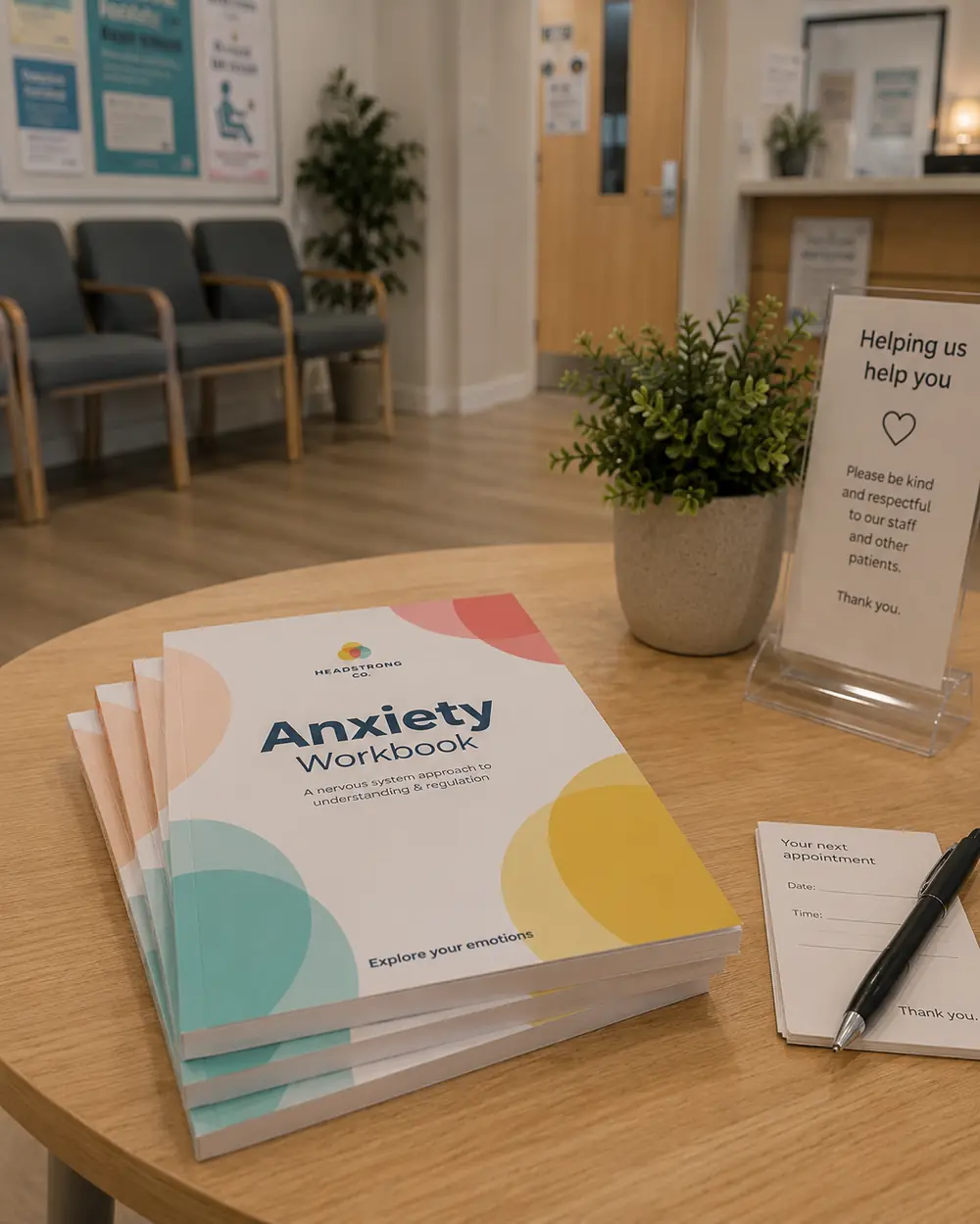
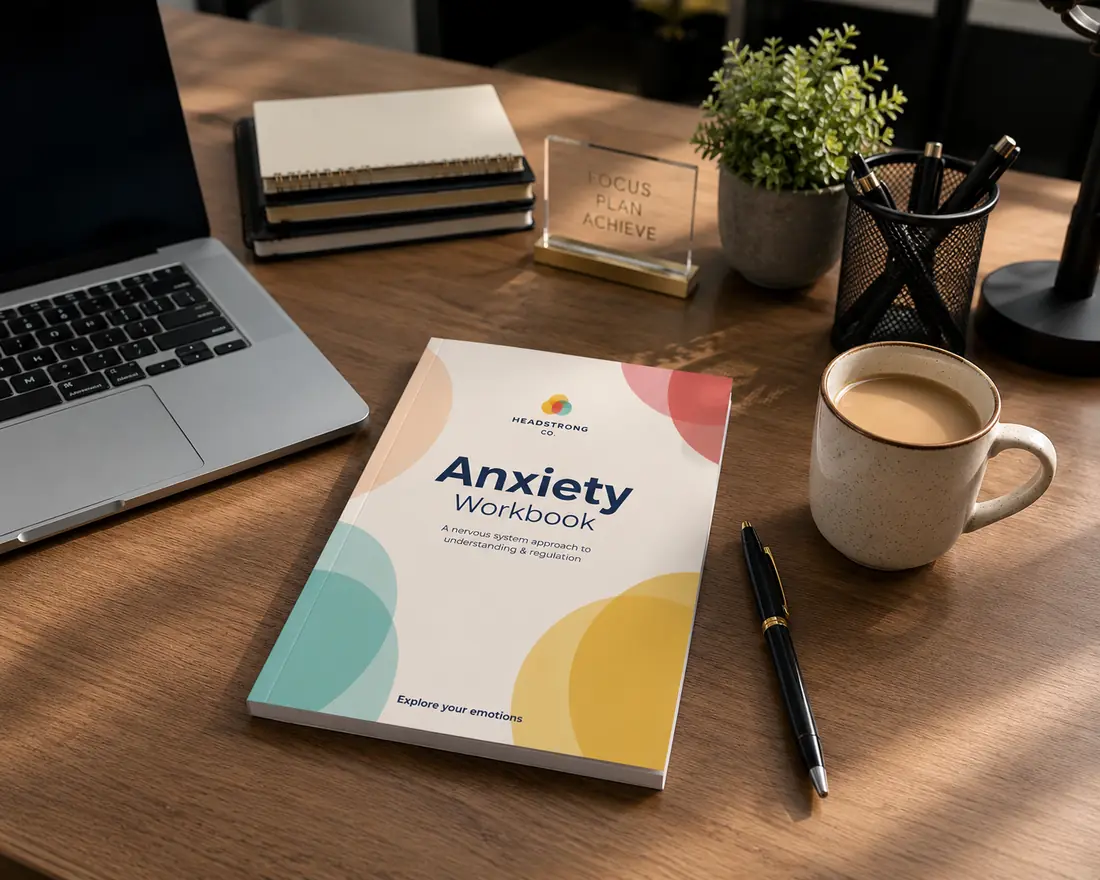
Support doesn't stop when we leave.
Everyone who sees us walks away with something real: a personal wellbeing plan and practical tools tailored to the pressures of their job. Want to go further? Our workbooks are available in bulk for your teams.
- Personal wellbeing plan for every attendee
- Take-home resources from each clinic
- Bulk workbook orders for staff and wellbeing hubs
The Workplace Wellbeing Guide
Our staff wellbeing booklet: practical, plain-English support your people can keep on their desk or in their van.
Works alongside your EAP. Reaches the people it doesn't.
An EAP is a good safety net. But it relies on someone who's already struggling picking up the phone to a stranger. We go the other way and turn up where your people already are.
Typical phone-based support
- Staff have to spot that they need help, then call a stranger
- Usually used once things have already got bad
- Little visibility for you on what's really going on
- Often generic, not shaped around your industry or roles
With Headstrong
- We're physically on site, so support is visible and easy to use
- People talk to us early, before it turns into absence or crisis
- Every conversation ends with a practical personal plan
- You get anonymised themes you can actually act on
- Delivered by practitioners with real mental health and safeguarding experience
From struggling quietly to having a plan.
What happens for your employee, and what comes back to you.
- 1
Someone's struggling
Stress, sleep, home life, burnout. They don't need a diagnosis to come and see us.
- 2
Headstrong clinic
A private conversation on site with a practitioner who gets it.
- 3
Personal wellbeing plan
They leave with practical tools and a plan that fits their actual life.
- 4
More support, if needed
A 6-week block, the advice line, or the right outside service.
Insight for you
Anonymised themes come back to you, so you can see what's shifting and act on it.
Getting started is simple
Your Mental Health First Aiders and managers can refer straight in, or staff can just turn up.
Discovery call
We learn about your sites, your people and what's already in place.
Clinic day
We set up on site. Private conversations, practical tools, a personal plan for everyone.
Ongoing support
Anyone who needs more moves into a 6-week block, with the advice line in between.
Insight for you
Anonymised themes go back to HR so you can see what's changing.
Confidential for your people. Useful for you.
HR teams rightly want to know how this works before commissioning it. Here's the short version. We'll go through it properly on a discovery call and agree it with you in writing before any clinic.
What stays private
- What someone tells us stays between them and their practitioner
- We don't report who attended or what they talked about
- Personal wellbeing plans belong to the employee
- Nobody is made to come, or to talk about more than they want to
What you receive
- Anonymised themes, like workload, sleep, money worries or burnout
- Overall numbers, such as how many people were seen
- Trends over time, so you can see what's shifting
- Suggestions for where the organisation could act
- Nothing that could identify an individual, including in small teams
If someone's at risk
- Our practitioners are experienced in safeguarding and risk assessment
- If someone is at risk of serious harm, or there's a safeguarding concern, we act on it, and we talk it through with the person first wherever it's safe to
- That might mean helping them reach their GP, crisis services or emergency services
- We only share information with the organisation when it's needed to keep someone safe, and only what's needed
Real mental health experience. Minus the jargon.
Headstrong is founded and led by Jade, a qualified Social Worker working in senior mental health roles, including psychiatric liaison in A&E. Clinics are delivered by practitioners with experience in crisis and secondary mental health services.
Founder credentials
Jade Murray, founder & lead practitioner
- Qualified Social WorkerExperience across children's services, mental health, crisis services, personality disorder pathways and care leavers
- Senior Mental Health PractitionerPsychiatric liaison, working in A&E with people in acute distress
- Clinical leadershipSenior and enhanced practitioner roles, supporting and guiding other professionals
- Trauma-informed practice & Structured Clinical ManagementStructured, consistent approaches to supporting people with complex needs
- Safeguarding & risk assessmentPart of day-to-day practice, not a one-off course
- Workforce wellbeing & trainingDesigning and delivering training for staff and teams
Before you commission us
You should be able to check exactly who you're bringing into your workplace. On a discovery call we're happy to talk through and share:
- Practitioner backgrounds and qualifications
- Insurance and DBS details
- Our confidentiality and safeguarding approach
- What the anonymised HR report covers
What organisations say
Replace with a real quote from an HR lead or manager.Name, role, organisation (or sector, if they'd rather not be named)
Replace with a real quote, ideally about uptake or what changed.Name, role, organisation
Replace with feedback from an employee who attended (anonymous is fine).Employee, sector
Clear pricing. No surprises.
Every workplace is different, so we tailor packages around your sites and headcount. Here's where things start.
Half-day clinic
- Up to 16 employees
- Two practitioners on site
- Personal wellbeing plans
Full-day clinic
- Up to 28 employees
- Two practitioners on site
- Personal wellbeing plans
6-week support block
- Up to 10 people per block
- 11 to 20 people from £6,200
- Follows on from clinic
Training, workshops and multi-site packages are quoted individually.
Not sure what you need? Start with a call.
- We'll ask about your organisation, your sites and your workforce.
- We'll talk through what's already in place, like an EAP or Mental Health First Aiders.
- We'll recommend the option that fits, with clear costs. You decide from there.
No cost, no obligation and no hard sell. Just a proper conversation.
Questions HR usually asks
Does this replace our EAP?
No, it works alongside it. Your EAP stays as a safety net. We make support visible on site, reach people earlier, and help them use the other support you already pay for.
Is this therapy?
No. It's trauma-informed emotional wellbeing support: practical conversations, tools and a personal plan. If someone needs therapy or clinical treatment, we help them find the right route to it.
Can managers or Mental Health First Aiders refer people?
Yes. Managers and MHFAs can refer people straight into clinic, and staff can also book themselves or just turn up.
What do we need to provide on the day?
Mainly a private space where people can talk without being overheard, like a meeting room or quiet office. We'll talk through the practical side on your discovery call.
Do you work across multiple sites?
Yes. Multi-site packages are quoted individually, based on your locations and headcount.
What will the HR report actually show?
Anonymised themes and trends, overall numbers and suggestions for where you could act. Never names, notes or anything that could identify someone. See confidentiality above.
Let's talk about your people.
A short, no-obligation conversation about your organisation, your sites and what you already have in place.